Post-halving, will Bitcoin peak this bullmarket?
JANUARY 1, 2022
Bitcoin, the world’s first decentralised digital asset, has revolutionised and continues to influence the global financial landscape. An interesting mechanism implemented on Bitcoin is called ‘the halving’, which controls the supply and inflation of these assets.
What is Bitcoin Halving?
Bitcoin halving is programmed within the blockchain’s code. Every four years, or every 210,000 mined blocks, miners receive only half of their usual rewards for verifying crypto transactions within the chain. Essentially, halving slows down the rate of new Bitcoins coming into circulation, controlling the currency’s supply.
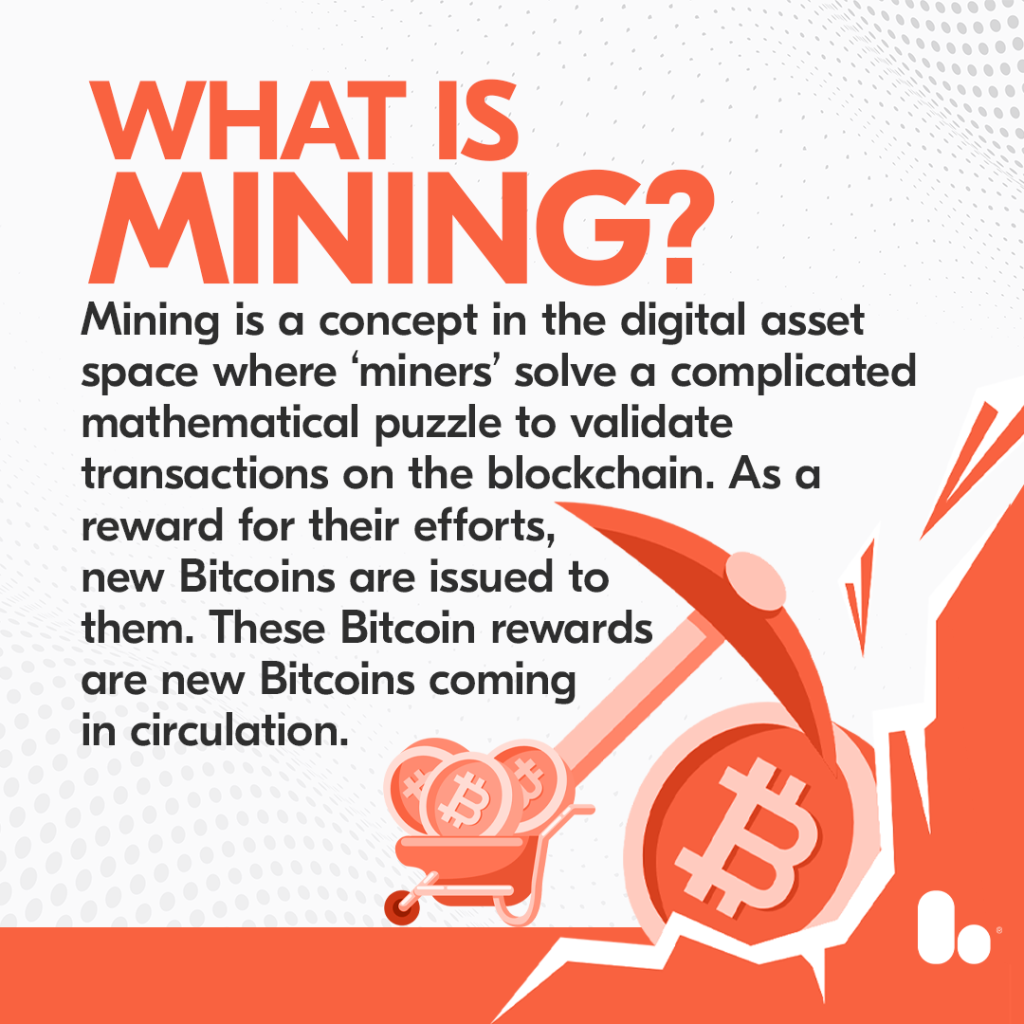
There are only 21 million Bitcoins to ever exist, and so, with each halving, there would be fewer coins to distribute to the miners. After the final halving event, or when these 21 million Bitcoins have been mined and are being circulated, there will be no more new Bitcoins to distribute. Miners will then get rewarded in transaction fees.
The market pre- and post-halving
The market expects another Bitcoin halving to happen in late April of this year, cutting the block reward in half to 3.125 BTC.
In the weeks, even months, leading up to the halving, the crypto market will experience a rise in trading activities, primarily driven by anticipation and investor speculation.
Veteran market actors would increase their holdings, anticipating future value appreciation of Bitcoin. This, plus the decrease of the coins in circulation, would attract new investors, and, therefore, fresh capital, fueling an even more volatile market and media attention.
According to Mustafa Qadir, Bolder Group’s Lead of Fund Solutions & Digital Assets, "With a finite supply of 21 million bitcoins, halving events strengthen the notion of Bitcoin as a form of digital gold. Amidst a macroeconomic landscape characterised by lingering inflation, Bitcoin emerges as an appealing option for portfolio diversification."
However, it is important to note that the price surge is not exclusively caused by the event. A major factor to consider is the recent approval of the US SEC of the spot Bitcoin ETF, which has attracted institutional investors to participate in the crypto space.
| Year of Halving Event | BTC Price During Halving | BTC Price 125 days post-halving |
|---|---|---|
| 2012 | $12.35 | $127 |
| 2016 | $650.53 | $758.81 |
| 2020 | $8,821.42 | $10,943 |
As of writing, BTC is valued at USD 67,309.70; post-halving, BTC value is expected to rise to $100,000 by the end of 2024, according to an analysis by Geoff Kendrick of Standard Chartered Bank.
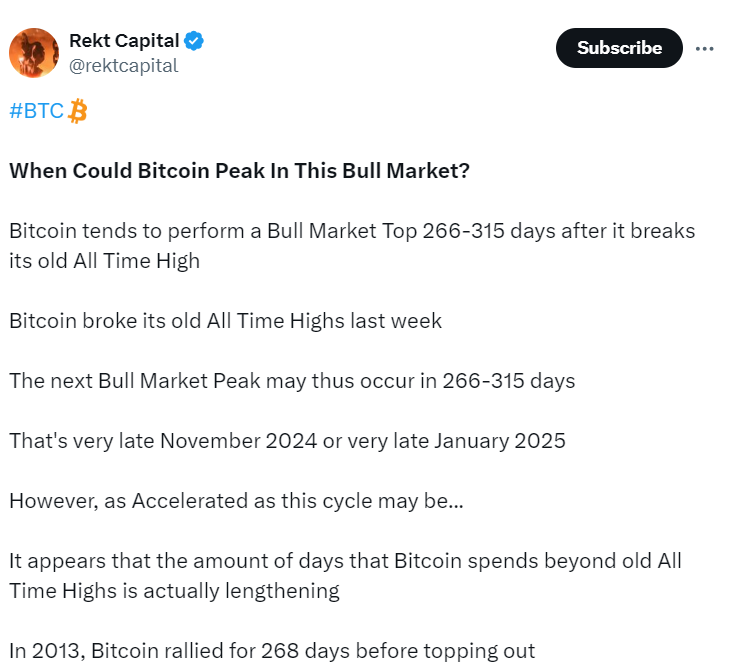
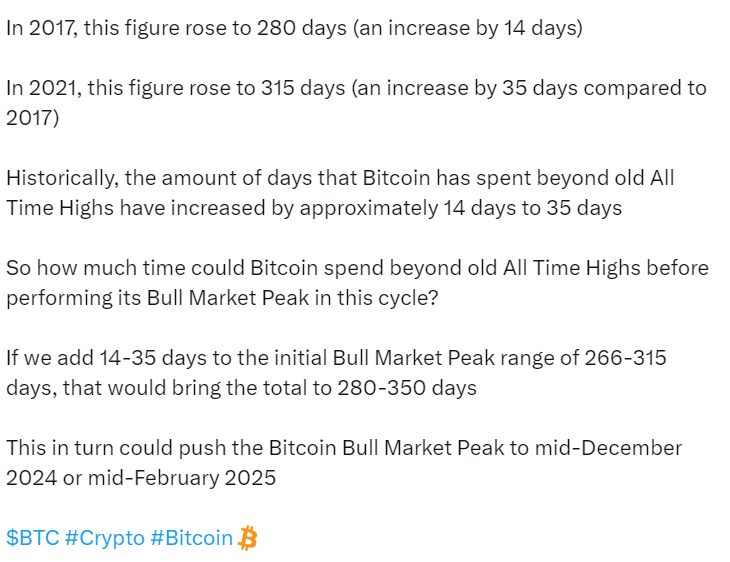
The bull market may peak in December 2024 or February 2025, according to an analysis by crypto analyst Rekt Capital (X).
The impact of Bitcoin halving on crypto fund managers
The scarcity of Bitcoin, as a result of halving, makes the digital currency more appealing to investors, strengthening its position as a valuable investment vehicle.
Qadir says: “Our analysis indicates that these events will likely draw an increased number of fund managers to seek exposure to this asset class. The potential for substantial returns and the maturation of the cryptocurrency market are expected to drive greater interest from institutional investors as well.”
For Bolder Group’s Digital Assets & Technology Analyst Devin Schoor, "Bitcoin is unlike anything we’ve seen before in the finance world, presenting a unique blend of risk and reward that sets it apart as a new kind of asset class ... That said, the crypto journey isn’t without its bumps. Market dips of 20-40% can happen, but they’re part of the game and shouldn’t wipe you out if you’re managing your risk well."
Digital asset managers with a focus on Bitcoin must do in-depth research and analysis about the timing of halving and its immediate and long-term impact on the coin’s prices, to ensure they can make informed investment decisions and possibly capitalise on market movements. Additionally, due to volatility-related risks, fund managers may consider further diversifying their digital asset portfolio to protect their investments and effectively manage risks.
For more information about this development and how this can affect your portfolio, you may reach out to your Bolder representatives or contact Mustafa via mustafa.qadir@boldergroup.com.
Disclaimer. Bolder Group does not provide financial, tax or legal advice and the information contained herein is meant for general information purposes only. We strongly recommend that before acting on any of the information contained herein, readers should consult with their professional advisers. The Bolder Group accepts no liability for any errors or omissions in the information, or the consequences resulting from any action taken by a reader based on the information provided herein.
Bolder Group refers to the global network of independent subsidiaries of Bolder Group Holding BV. Bolder Group Holding BV provides no client services. Such services are provided solely by the independent companies within the Bolder Group which are each legally distinct and separate entities and have no authority (actual, apparent, implied or otherwise) to obligate or bind Bolder Group Holding BV in any manner whatsoever. The operations of the Bolder Group are conducted independently and have no affiliation with third-party financial, tax or legal advisory firms or corporations.