A brief overview of Mauritius real estate
JANUARY 1, 2022
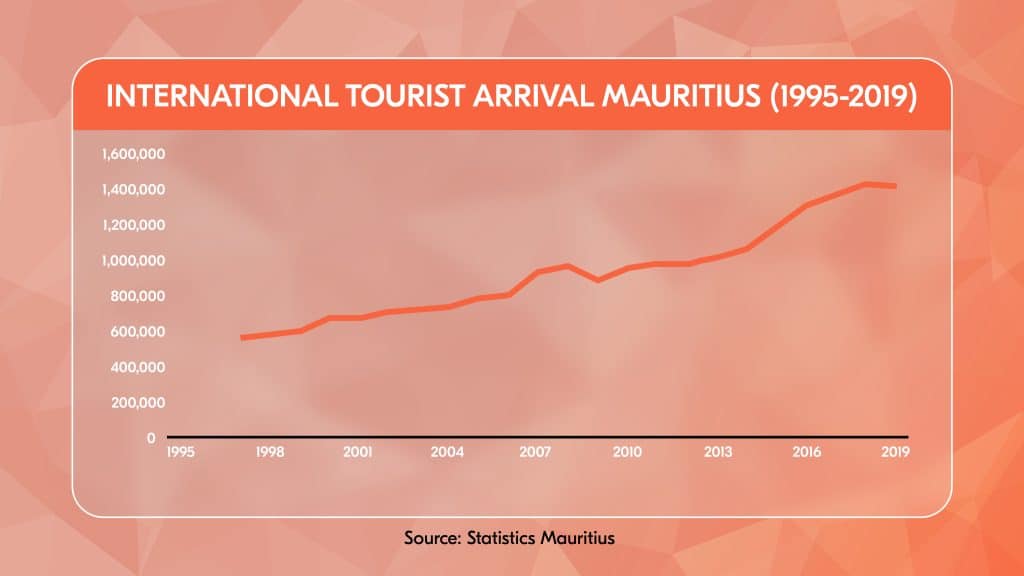
Mauritius has been a sought-after destination for high-end tourists for over 70 years, famed for its blue lagoons and pristine long stretches of white-sand beaches along the Indian Ocean. However, foreigners were forbidden from purchasing property on the island until 2002, when the government introduced the Integrated Resort Scheme (IRS), which offered residency to any foreign buyer who spent at least USD 375,000 on a luxury residence or “development scheme”.
Since the IRS was rolled out, real estate acquisitions in Mauritius have boomed year-on-year, with high-net-worth individuals eager to take advantage of the island’s beauty and seclusion. Moreover, the lack of inheritance tax, capital gains tax, dividend, interest, or royalties withholding taxes, strong tax treaty network and no exchange control also proved attractive pull-factors.
Foreign direct investment (FDI) in high-end property totalled USD 1.8 billion (63.3 billion Mauritian Rupees) between 2014 and mid-2022, accounting for approximately 40 per cent of all FDI inflow into the island. The finance ministry projects that property sales assisted to increase inflows to 25 billion Mauritian Rupees last year, emphasising the cruciality of the real estate industry as a contribution to the nation’s total FDI. Furthermore, property sales have assisted the growth of the tourism and hospitality sectors in Mauritius, which currently employ approximately 100,000 people (19 per cent of the total workforce).
Historically, most of the interest in acquiring Mauritian property has come from French buyers, however, growing numbers of South Africans and British are purchasing real estate on the island. The CEO of Heritage Villas Valriche, Anton de Waal, said that the clientele investing in the luxury development are “about 30 per cent French, 30 per cent South African, 15 per cent from the UK”, with the rest from elsewhere across the globe.
The first investor to make use of the IRS was Medine, who established The Tamarina Golf Estate and Beach Club, and currently own 10,000 hectares of land in western Mauritius. With 119 villas, a restaurant, a boutique hotel and an 18-hole golf course, The Tamarina is the only sold-out and fully completed IRS estate on the island. De Waal’s Heritage Villas Valriche sold its first villa in 2007 and has since moved onto its final phase of development, having attracted 13 billion Mauritian Rupees in FDI over the duration of the project.
The upsurge in demand for luxury developments in Mauritius has attracted many real estate moguls since, and famously this year, Kerzner International (developer of the Atlantis: The Royal) has announced it is investing approximately R1.8 billion in 52 ultra-exclusive villas on Mauritius’s eastern coast. Prices for properties on the former nine-hole golf course will range from $2.8 million (R51 million) for a two-bedroom unit to $14.4 million (R264 million) for a seafront villa. There has already been significant interest in the Kerzner International development, with more than 80 per cent of all available units in final negotiations and only a handful of seafront villas left for grabs.
Such demand for luxury villas has created fierce competition amongst high-end property developers to provide the best amenities and services. Villa Charlotte, located in the luxury Anahita Estate, is currently valued at $10.5 million (R192 million). Showcasing 6-bedrooms across 905 m2, staff accommodations, an entrance garden, a “treatment” suite, 25m infinity pool and marble flown from Italy to adorn the master bathroom, this villa is just one of several that benefits from the access to an immaculately maintained golf course.
Whilst there is an ever-growing demand for high-end villas, there is a simultaneous interest from the mid-range market. IBL Group CEO, Arnaud Lagesse, noted “Even though we still see that there is a market for high-end villas – over $1 million – we have noticed that demand has moved toward more practical and safe investments in what we can define as a mid-range market between $300,000 and $750,000,” he said. “In this segment, the market is booming”.
We expect demand and development to only grow in coming years as international awareness of this tax-friendly paradise broadens. As said by Mont Choisy Group CEO, Jyoti Jeetun, “Mauritius has reinforced and broadened its position as a world class lifestyle destination”.
Looking to enter the Mauritius real estate market?
Having the assistance of a team of experienced professionals is necessary to navigate the booming property and real estate market in Mauritius. Bolder Group can equip you with bespoke fund and corporate services to ensure your success in the Mauritian market.
Learn more about our services by contacting our team now.