Family Office Cybersecurity: Protecting Global Legacies
JANUARY 9, 2026
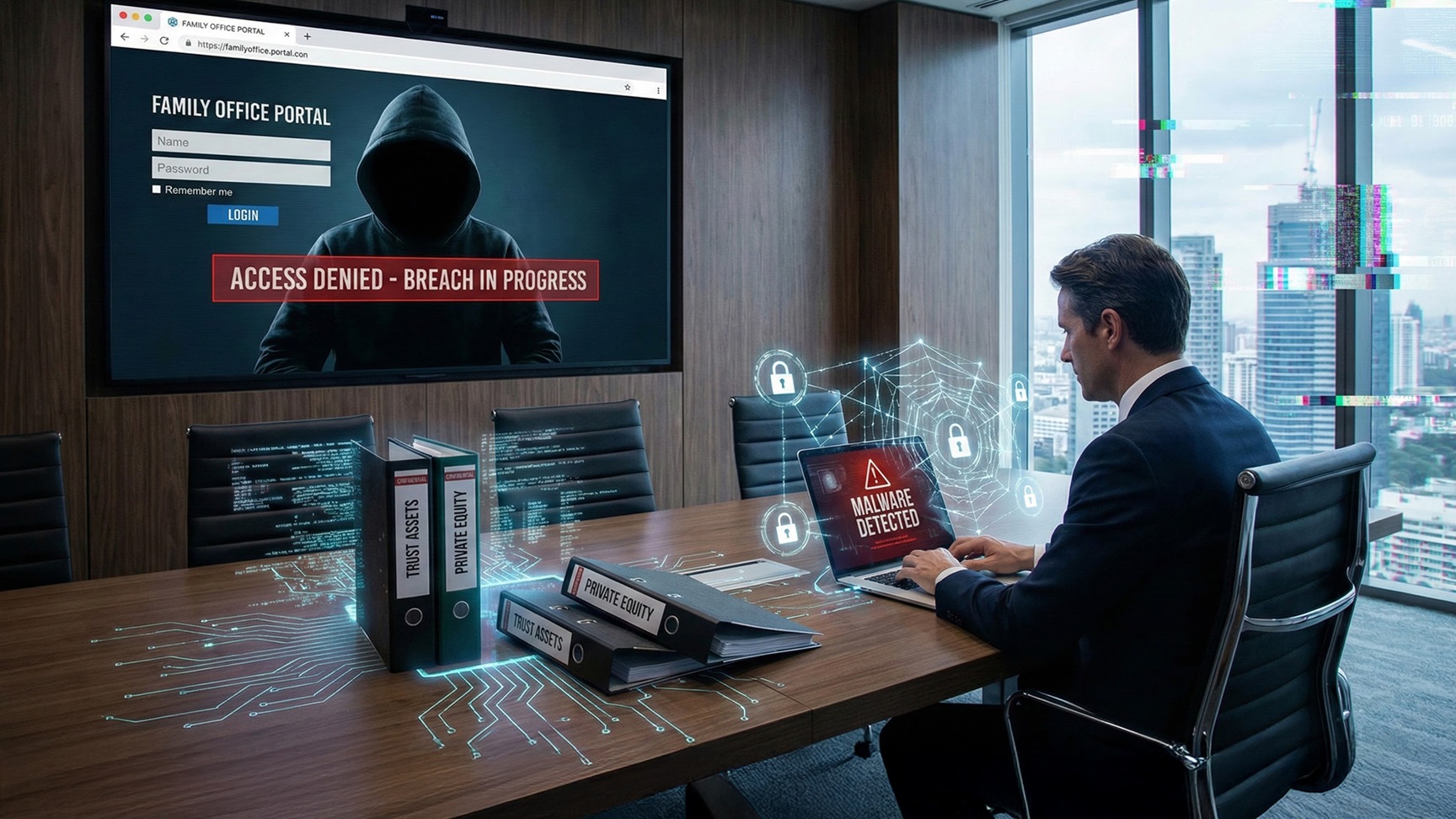
According to the Deloitte Family Office Cybersecurity Report (2024), 43 per cent of family offices have experienced a cyberattack in the last 24 months. Phishing remains the most common attack, but deepfake impersonation is the fastest-growing threat. For offices with over $1B Assets Under Management (AUM), the attack rate jumps to 62 per cent.
Despite being frequent targets for managing high-value assets, 31 per cent of family offices still operate without a cyber incident response plan, leaving them dangerously exposed to cybercriminals. Adopting a global approach to governance and security closes this cybersecurity gap and ensures asset protection.
The new prime target: Family Offices
Family offices manage capital on an institutional scale yet often rely on discreet operations and lean staffing, creating a dangerous security gap. Although they are quick to adopt investment technologies, family offices’ core infrastructure, reliance on legacy systems (on-premises servers and document management systems) may expose them to cyberattacks and data breach.
Family offices face emerging threats due to the risk landscape evolving significantly, driven by three key factors:
- AI-Powered Impersonation – use of generative AI to clone voices or draft perfect whaling emails, known as targeted phishing;
- Professionalised Ransomware – attacks targeted when family offices defenses are most distracted and the
- Cloud Gap – migrating operations to the cloud without updating security protocols.
Cybersecurity challenges
In the 2025 Financial Services Cyber Resilience Report published by Omega Systems, which surveyed more than 300 US financial executives from family offices, RIAs and private equity firms, 83 per cent of family offices express concern about deepfakes and impersonation. However, only 60 per cent are confident their teams can detect or prevent such cyberattacks.
Moreover, one of the key cybersecurity concerns is the reluctance of family offices to embrace IT outsourcing, with only 8 per cent relying on external providers for daily cybersecurity operations. This leaves them without access to specialised expertise and advanced threat-detection technologies.
Survey data also reveals that 67 per cent of family offices cite legacy infrastructure as a key barrier to effective breach recovery. Their reliance on outdated systems exposes critical vulnerabilities, opening the door to exploitation by cybercriminals.
How to bridge the security gap
- Prioritise Employee Training: Human error remains the leading entry point for cyberattacks. Continuous security awareness training is crucial to fight against threats and strengthen frontline defenses.
- Modernise Infrastructure: Upgrading from legacy systems is essential for eliminating security gaps, shutting down backdoors that cybercriminals often target.
- Engage External Expertise: By working with a Managed Security Service Provider (MSSP), family offices benefit from advanced technologies and ongoing oversight, closing gaps that teams can’t sustain internally.
- Counter AIBased Threats: Investing in advanced security solutions designed to detect deepfakes and AI-generated attacks reduces the exposure of employees to phishing campaigns.
Secure your legacy with Bolder
Legacy protection goes beyond financial management; it requires robust resilience against evolving threats. As a trusted global partner to leading asset managers and ultra-high-net-worth families, Bolder delivers solutions that close the gap between traditional private structures and modern cybersecurity requirements. We can help you modernise legacy infrastructure before it becomes your greatest liability.
Connect with our family wealth and governance solutions team to learn how we can integrate robust cybersecurity governance into your family office structure.
Bolder Group does not provide financial, tax or legal advice and the information contained herein is meant for general information purposes only. We strongly recommend that before acting on any of the information contained herein, readers should consult with their professional advisers. The Bolder Group accepts no liability for any errors or omissions in the information, or the consequences resulting from any action taken by a reader based on the information provided herein.
Bolder Group refers to the global network of independent subsidiaries of Bolder Group Holding BV. Bolder Group Holding BV provides no client services. Such services are provided solely by the independent companies within the Bolder Group which are each legally distinct and separate entities and have no authority (actual, apparent, implied or otherwise) to obligate or bind Bolder Group Holding BV in any manner whatsoever. The operations of the Bolder Group are conducted independently and have no affiliation with third party financial, tax or legal advisory firms or corporations.