Year-End Governance and Compliance Risks for BVI and Cayman Entities (2027 Guide)
Year-End Governance and Compliance Risks for BVI and Cayman Entities (2027 Guide)
NOVEMBER 26, 2026
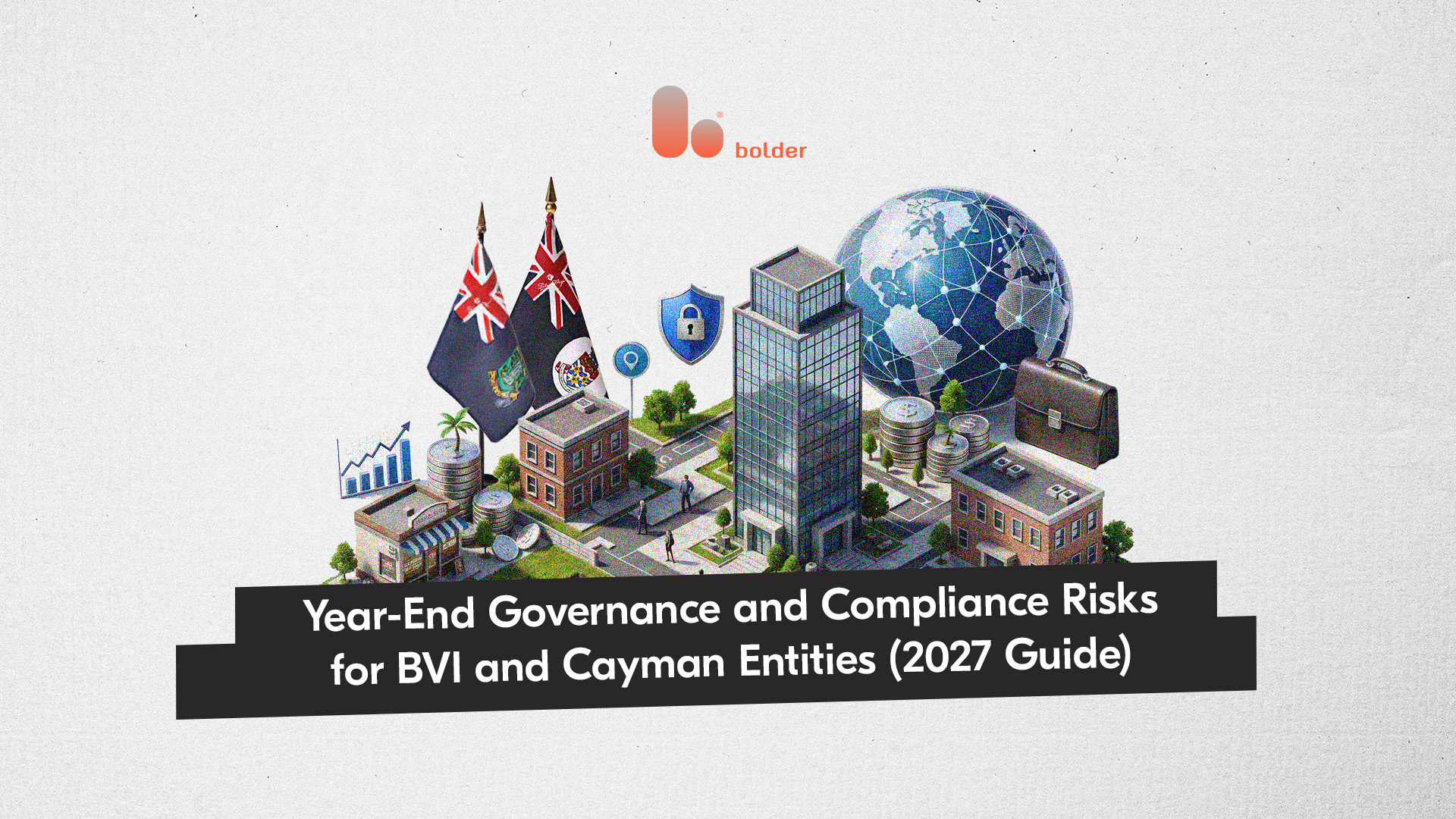
Year-End Governance and Compliance Risks for BVI and Cayman Entities Heading into 2027
Quick Read
Governance & Compliance Risks: The biggest year-end risks are governance gaps, outdated ownership data, missed filings, stale KYC and unpaid fees.
Governance and KYC: Ratify 2026 decisions with resolutions or minutes, and refresh AML/KYC files before year-end.
Beneficial ownership: BVI applies a 10% threshold filed through the registered agent on VIRRGIN, while Cayman uses a 25% threshold with the register maintained by the entity’s corporate services provider (CSP).
Filings and fees: BVI economic substance filings are due within six months of period end and the annual financial return within nine months. Cayman’s Economic Substance Notification (ESN) is due by 31 January.
What Are the Year-End Board and Governance Requirements for BVI and Cayman Entities?
Directors must show active, substantive governance. Before year-end, the board should convene or pass written resolutions documenting the year’s key decisions, annual accounts and service-provider oversight.
Board resolutions: Formally document all 2026 appointments, share issuances, dividends and major agreements.
Statutory registers: Keep member and director registers up to date. For BVI entities, any updates must be filed through the registered agent within 30 days.
Records and audits: BVI companies must retain accounting records for at least five years. For Cayman entities, maintain proper books and prepare regulated funds for audit and CIMA filings.
AML/KYC: Confirm that your registered agent, CSP and administrator hold current records on your ownership, directors and source of funds.
Service providers: Document ongoing oversight of all outsourced administration, compliance and AML officer functions.
What Are the Beneficial Ownership Disclosure Requirements for BVI Companies? <h2>
BVI entities must collect and maintain up-to-date beneficial ownership records (at the 10% threshold, lowered from 25% in 2025) and file them through their registered agent on VIRRGIN. The register remains closed to the general public.
10% threshold: Applies to a natural person who owns or controls 10% or more of shares or voting rights, can appoint or remove a majority of directors or otherwise controls management.
30-day filing window: Any changes to beneficial ownership must be filed within 30 days. The transition period for pre-2025 entities has expired; unfiled entities must act immediately.
Trusts and shareholders: Disclose details of trustees, settlors, protectors and beneficiaries (unless held by a BVI-licensed trustee). Entities must also file their register of members and any nominator details.
Exemptions: Listed companies and eligible regulated funds file an exemption notice rather than full beneficial ownership particulars.
Penalties: Missing filing deadlines can result in fines and loss of good standing, preventing the issuance of Certificates of Good Standing, continuations and voluntary liquidations.
What Are the Beneficial Ownership Requirements for Cayman Islands Entities? <h2>
Under the Beneficial Ownership Transparency Act, in-scope Cayman entities must identify and record their beneficial owners. The reporting threshold is 25% or more of shares, voting rights or partnership interests or ultimate effective control. This is higher than BVI's 10%.
25% threshold: Applies to persons who hold 25% or more, or who exercise ultimate effective control.
CSP-maintained register: The entity's corporate services provider (CSP) maintains the register and files updates with the General Registry at least monthly.
Change reporting: Relevant changes must be reported through the CSP.
What Are the Most Common Year-End Compliance Mistakes for Offshore Entities?
Most compliance failures come from outdated records, missed deadlines and undocumented decisions. Here are five red flags to watch out for:
Top Year-end Offshore Governance & Compliance Red Flags Heading Into 2027
Red Flag 1: Outdated beneficial ownership details on BVI VIRRGIN or unreported ownership changes under Cayman rules.
Red Flag 2: Missed economic substance obligations: BVI ES information is due within 6 months of period end. The Cayman ESN is due 31 January.
Red Flag 3: Incomplete accounting records or an uncollected BVI Financial Annual Return.
Red Flag 4: Undocumented board resolutions, stale AML/KYC files and weak service-provider oversight.
Red Flag 5: Late annual fees or filings, triggering penalties, loss of good standing or strike-off risk.
How Do BVI and Cayman Governance Requirements Differ? <h2>
Both frameworks follow international transparency and AML standards but differ in day-to-day execution: ownership thresholds, filing channels and statutory deadlines.
Governance Area | British Virgin Islands (BVI) | Cayman Islands |
Beneficial ownership threshold | 10% of shares or voting rights, right to appoint or remove a majority of directors, or other control. | 25% of shares, voting rights or partnership interests, or ultimate effective control. |
Register and filing route | Entity files through its registered agent on the VIRRGIN platform with the Registrar. | CSP maintains the register and files with the General Registry at least monthly. |
Change reporting | Filed within 30 days of the change. | Relevant changes must be reported through the CSP. |
Economic substance | Information to registered agent within 6 months of the economic substance financial period end, filed on VIRRGIN. | ESN due 31 January; economic substance return within 12 months of period end for entities carrying on a relevant activity. |
Financial reporting | Financial Annual Return to registered agent within 9 months of year-end. Not audited and not public. | Regulated funds file audited accounts and a Fund Annual Return with CIMA (30 June for a 31 December year-end). Other entities keep books and records. |
Annual fees | Annual government fee paid through the registered agent. | Annual return and fee, filed after the ESN. |
Primary regulatory bodies | BVI Financial Services Commission (FSC), Registrar of Corporate Affairs and International Tax Authority (ITA). | Cayman Islands Monetary Authority (CIMA) and General Registry. |
What Should BVI and Cayman Entities Complete Before 31 December?
To avoid compliance risk and fees heading into 2027, work through this checklist before year-end and close out 2026 cleanly.
Governance and records: Ratify all 2026 decisions, verify ownership on VIRRGIN and with your CSP, update AML/KYC files and settle annual fees across both jurisdictions.
Financial preparation: Compile BVI Financial Annual Return figures (a revised form applies to returns filed from 2027) and initiate audit workflows for regulated Cayman funds.
Check liquidations: Place any retiring Cayman entities into voluntary liquidation by 1 December 2026 to avoid 2027 annual fees and meet the 31 December deregistration deadline for CIMA-registered entities.
Diarise 2027 deadline: For entities with a 31 December year-end, schedule BVI economic substance information filings around 30 June 2027 and the annual return for around 30 September 2027. Note that substance deadlines follow the entity’s economic substance financial period, which doesn't always match its accounting year.
Is Your Offshore Entity Ready for 2027?
Don’t let hidden red flags compromise your corporate standing. Bolder Group delivers tailored governance, corporate secretarial, and regulatory reporting solutions built to future-proof your offshore entities.
Speak with your local Bolder representatives today to schedule a Year-End Compliance Review.
Disclaimer: This article provides general information only and is not legal advice. Please confirm deadlines with your registered agent or CSP.